NAVAL RESERVE FLAGpGRAM 06-03
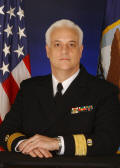
From: Rear Admiral Norton C. Joerg, JAGC, USN
To: All NavyJudge Advocates and Legalmen serving in the Reserve Component (RC)
Subj: FlagpE-Gram 06-03
Date: 8 September 2006
1. As FY 06 draws to a close, I want to
touch base with you to provide an update on where we stand as a community and to
keep you informed of issues affecting our Navy. Our challenges do not abate;
indeed, they seem only to grow -- but, as we know, challenge always brings
opportunity.
2. Readiness, “Part III”. Though I am loath to begin upon a somewhat negative
note, readiness is such a key to our contribution that I must emphasize it yet
again, and up front. We cannot overstate the importance of readiness to our
ability to support our nation’s enduring mission in the long war against terror.
Unfortunately, we continue to see a lack of readiness, both in the active and
reserve components, the AC and RC, which was underscored by CNO in a recent
NAVADMIN (NAVADMIN 083/06). CNO notes that readiness means having up-to-date
security clearances, being in satisfactory physical condition, properly
documented and updated, and having financial, legal, and personal affairs in
order. Unit leaders should be pre-screening their members routinely to ensure
readiness when called upon, both for possible recalls or mobilizations, and for
other duty in any form. This includes specifically taking care that security
clearances are up-to-date, including the required periodic reinvestigations. We
have had instances of officers reporting for duty on an AT or ADT losing their
effectiveness for a significant portion of that duty while they scramble to get
security clearances in line. Such a lack of foresight and preparedness along any
dimension is something we can ill afford. We are a mature, professional
community -- I know we can get out in front of this, and I expect and demand no
less.
3. Apply. The JAG board met on 24-25 August to select officers for CAPT and CDR
assignments, and the results were released on 1 September. Orders will be issued
this month, and all selectees must accept or deny the board-selected billet via
the Apply website no later than 30 September. Failure to accept the billet can
result in transfer from pay status. Also note the following billet requirements:
Selectees must be eligible to accept and execute their APPLY Board assignment
orders NLT 15 DEC 06. If you are unable to meet all billet requirements,
security clearances, and achieve prescribed physical readiness per the most
recent PRIMS (Physical Readiness Information Management System) and the Medical
Readiness Reporting System's (MRRS) documentation, your orders will be
cancelled. Officers going into non-pay status must notify parent activities by
30 September of their non-pay preferences (VTU or IRR) and the drill site
location. Billets that went unfilled will be announced shortly. We will fill
these billets as needed on an interim basis. I invite all members who are
interested in such an assignment to make their interest known via the chain of
command to CAPT Twining. Remember, billet rotations now occur as of 1 January.
After the passage of a significant amount of time since we last focused on it,
it appears to me that some refresher training regarding Apply is in order. We
will look to include such training in our upcoming MLTS cycle. In the meantime,
I will make one key and overarching observation: We must all remember that we
are responsible for our records, and for understanding when boards meet and the
associated deadlines for the submission of material. To be competitive, records
must be as complete as possible, and any uncorrected discrepancies should be
explained in correspondence to the board. Overall, the records were in
outstanding shape, perhaps better than ever, but this only highlights the
difficulties that incomplete records can pose for the unprepared. Accordingly,
all who keep this principle in mind will be well-served.
4. A Vision for a 21st Century Navy. The January 2006 edition of the U.S. Naval
Institute’s Proceedings magazine included an article by the CNO laying out his
philosophical underpinnings and rationale for his vision for our Navy. I wanted
to cover those points here to ensure that we in the JAG community understand our
leadership’s thinking and where that thinking may take us. In the article,
Admiral Mullen sets forth the following eight central tenets that comprise
guidance for a balanced force that is resilient, adaptable, and capable of
meeting the demands of a multi-mission, multi-task environment.
-- America is and will remain a maritime nation.
-- We live in a challenging new era. Our world is far more complex, uncertain
and threatening that any we have faced before with increased irregular and
unrestricted warfare by adversaries unconstrained by conscience or civilized
norms. To be effective in this environment, the Navy must provide the combatant
commanders not only tools of war but also tools to implement stability, security
and reconstruction, such as we did in Indonesia and our own Gulf states.
-- The Navy will remain rotational, forward deployed, and surge capable.
-- The level of international maritime cooperation will increase. The “global
maritime commons” are shared by all maritime nations and provide economic
opportunity and security but also threats. These maritime areas are being
increasingly used for piracy, international criminal networks, and smuggling.
These are transnational threats that require global cooperation.
New opportunities and security challenges require new skills. We must be ready
to fight in a vast array of environments that range from failing states and
ungoverned spaces to virtual worlds and cyberspace. We must be ready to
understand and foster cooperation in diverse cultures and our sailors must be
ambassadors, educators, health care providers, mentors and friends. This
requires developing new tools and skills and a readiness to operate in a joint,
combined and interagency environment.
Calculating the size of the force demands balance among capabilities, capacity,
and fiscal reality. Defining the future force structure and building to meet the
varied and competing requirements facing the Navy is the most daunting challenge
facing the Navy now.
The future Fleet will be larger and more capable. We must be able to overmatch
any adversary and assure access/sustainability of a joint force in blue, green,
and brown waters. We need a globally distributed and networked air, surface, and
subsurface capability and we must work closely with the Coast Guard. This force
will rely on joint seabasing and will leverage both manned and unmanned
technologies.
Sea Power 21 will remain the framework of our Navy’s ongoing transformation. Our
Sea Strike capability will be centered on carrier and expeditionary strike
groups. Sea Basing will be facilitated by expeditionary warfare ships,
prepositioning, and logistics. Sea Shield will be enabled by advanced
antisubmarine warfare and theater ballistic-missile defense.
I encourage all of you to read the article in its entirety. As you read it, you
will see that we need to be ready to operate beyond our traditional battle space
in a joint and interagency environment. Part of this will require awareness and
understanding of, and a presence and interaction in, diverse regions. We are now
in the midst of a transformation process that will include continued work to
align the active and reserve components of our uniformed legal community ever
more closely together. A key to our success in doing so, whether AC or RC, is
for all involved to understand the complex and shifting context for the changes
we contemplate. This article is an excellent place to start, and I commend it to
you, along with all the additional professional reading that you can find time
to pursue.
5. Symposia. FY-06 brought us the unique experience of 5 Military Law Training
Symposia around the country, a schedule which arose out of significant fiscal
constraints that drove us to a locally-based format early in the year.
Unfortunately, the constraints also led to cancellation of our CO/SJA symposium
for the FY, as well. As many of us know, the “worm turned”, and the fiscal
picture brightened for much of the year, with the result that we were actually
able to increase the tempo of our support to the AC overall. Nevertheless, we
learned some lessons from the local MLTS format, and we will try to incorporate
them into this year’s training cycle. I offer many thanks to all of you who
participated so effectively during this past MLTS cycle, many at your own
expense. Your esprit and sense of service is gratifying and most impressive.
For FY-07, we will be returning to a “two-MLTS” format, with one symposium in
the east, one in the west. We will have a CO/SJA symposium is well. We are
working on incorporating some of the advantages of smaller, more intimate
groupings, which we saw in action through our smaller-format MLTS’s this year.
Just what shape all of this will take, and the exact locations for each
evolution, will be announced later this year, by the late fall. In the meantime,
please know that we will be at pains to continue our tradition of effective
training and networking designed to keep you ready and engaged. We welcome
suggestions, which you should pass up the chain of command as soon as possible.
6. JAGC Transformation. For me, one of the most lively and useful aspects of our
MLTS’s this year were the open and free-wheeling discussions we had at every
venue regarding the transformation upon which our JAGC community has embarked.
Since the last of our discussions, there has been much progress toward setting
out an outline, a strategy, for the way forward for all of us, AC and RC,
officer and enlisted, alike. Strategic implementation information will be
released soon. Once it is, I plan a series of communications that will be
designed to place this information into context for our RC community.
Discussions of the plan’s implications and steps will also be a central feature
of all of our training symposia during FY-07.
In the meantime, I am aware that there is a lot of “scuttlebutt” circulating
with regard to this transformation. I will not address the particulars of the
rumors, because they vary greatly, save to say that all who hear them should
discount them. I have not heard one that is fully accurate or fully in context.
Keep an open mind and wait for the facts -- which are coming soon, in thorough
form backed by full discussion.
Bottom line: We can be confident in expecting change, but we should not fear it
as something precipitous or radical. It will be measured, coordinated, and
subject to adjustment as we proceed, with input from all “stakeholders”. It will
present challenges, but, as always, that will offer opportunities. Our practice
stands to get richer and more able to respond to evolving needs. To ensure this,
we will need your enthusiasm, energy and ideas – but these must arise from
facts, and not from fear or rumor. Keep an open mind and wait for these facts,
which are coming soon.
7. Miscellaneous Notes.
-- Remember Reserve Centers are now to be called “Navy Operational Support
Centers” or NOSCs. OPNAVNOTE 5450 dtd 22 Mar 06.
-- As of 14 August 2006, there are 58,070 SELRES sailors.
-- Navy websites are moving behind the firewall so you need to make sure you
have properly set-up and programmed CAC cards, with functional PINs.
Additionally, make sure you have a CAC reader for your home computer to do
Reserve work via NMCI from home, via Outlook Web Access and the internet. Please
work these issues through your chains of command and your NOSCs. Training is
available from these sources and online.
Finally, I expect all members to have an NMCI e-mail address. We must be all
together in the arena of electronic communications. Private e-mail addresses
will remain acceptable as back-ups, but each member of our program must have an
NMCI address as the primary e-mail address for Navy business. More specific
guidance will follow via the chain of command.
8. Final Thoughts. I cannot say it enough: Thank-you for the job you do and the
sacrifices you make. I know absences from families and missing weekends and
commitments can be tough, but your efforts are contributing to the greater good.
You are participating in a tough and challenging time in our nation’s and our
Navy’s history, but you are helping to write that history. You are truly
involved in doing many important things in our nation’s service for which you
can be very proud, indeed. I am the happy recipient of a constant stream of
accolades and expressions of gratitude from every point on the “compass”
regarding the wonderful support that you give. I look forward to continuing to
get that great feedback from the Fleet, and to working with you to make our
ability to keep it up and do the mission in better ways a reality. Keep up the
great work, with the pride, focus and enthusiasm that are hallmarks of all you
do!
All the best!
- Norton Joerg